Aortic Aneurysm

Aortic Aneurysm Second Opinion Before Surgery.

Deciding whether — and when — to repair an aortic aneurysm means weighing the risk of rupture against the risk of surgery. Has your aneurysm truly reached the threshold? Could it be safely watched? Is endovascular repair an option? An independent review by a cardiac surgeon and a cardiologist answers these questions with your real numbers. A written review is delivered within 24 hours of your records — from $500.

Check My CaseRequest a Heart Team Callback
Start My Written Review — From $500

Cardiac surgeon + cardiologist review · From $500 · 24-hour written review after records · No referral · HSA/FSA eligible

The 4 Questions We Answer

The Four Questions Every Aneurysm Patient Deserves Answered

An aortic aneurysm second opinion exists to answer four questions clearly and honestly. We address each one directly, in writing, signed by your Heart Team.

Do I really need surgery?

We confirm whether your aneurysm has reached the size or growth threshold where repair is genuinely indicated — or whether it can be safely watched. Many aneurysms are monitored for years before they ever need treatment; the question is whether yours has truly crossed the line.

Is there a less invasive option?

For many abdominal and descending thoracic aneurysms, endovascular repair (EVAR/TEVAR) treats the aneurysm through small groin incisions with a stent graft, avoiding open surgery. We assess whether your anatomy supports an endovascular approach and whether it is the right choice for your age and risk.

What is my actual risk?

We weigh two risks against each other: the risk of rupture if you wait, based on your aneurysm size, location, growth rate, and shape; and your operative risk if you proceed, calculated from your clinical data. Sound decisions require both numbers, not just one.

Where should I have it done?

Outcomes for aortic repair — especially complex thoracic, thoracoabdominal, and aortic root surgery — vary dramatically by surgeon and center volume. We identify the highest-volume aortic specialists and reference centers for your specific aneurysm location and type.

The Decision

Thresholds, Timing, and the Open vs. Endovascular Choice

The aneurysm decision turns on a handful of precise factors — size, growth, location, anatomy, and your own risk. Here is what an independent review weighs before recommending surgery or surveillance.

Size Thresholds & Guidelines

Repair is generally recommended when an abdominal aortic aneurysm reaches about 5.5 cm in men (often 5.0 cm in women), and when an ascending thoracic aneurysm reaches roughly 5.5 cm — earlier (around 5.0 cm or even smaller) for bicuspid aortic valve, Marfan syndrome, Loeys-Dietz, or other connective-tissue and genetic conditions. The right threshold for you depends on your aneurysm location, your body size, your family history, and your underlying cause. A second opinion confirms which threshold actually applies to your case.

Growth Rate & Rupture Risk

Size is not the only factor. Rapid growth (more than about 0.5 cm per year), a saccular rather than fusiform shape, female sex, smoking, uncontrolled hypertension, and a strong family history all raise rupture risk and may justify earlier repair. We assess your serial imaging to define how fast your aneurysm is changing and what that means for timing.

Watchful Waiting vs. Repair

For aneurysms below the repair threshold, structured surveillance with periodic imaging and aggressive blood-pressure and risk-factor control is often the safest path — operating too early exposes you to surgical risk without benefit. The art is knowing when to keep watching and when to act. An independent review confirms whether continued surveillance or repair is right for you now.

Open vs. Endovascular Repair

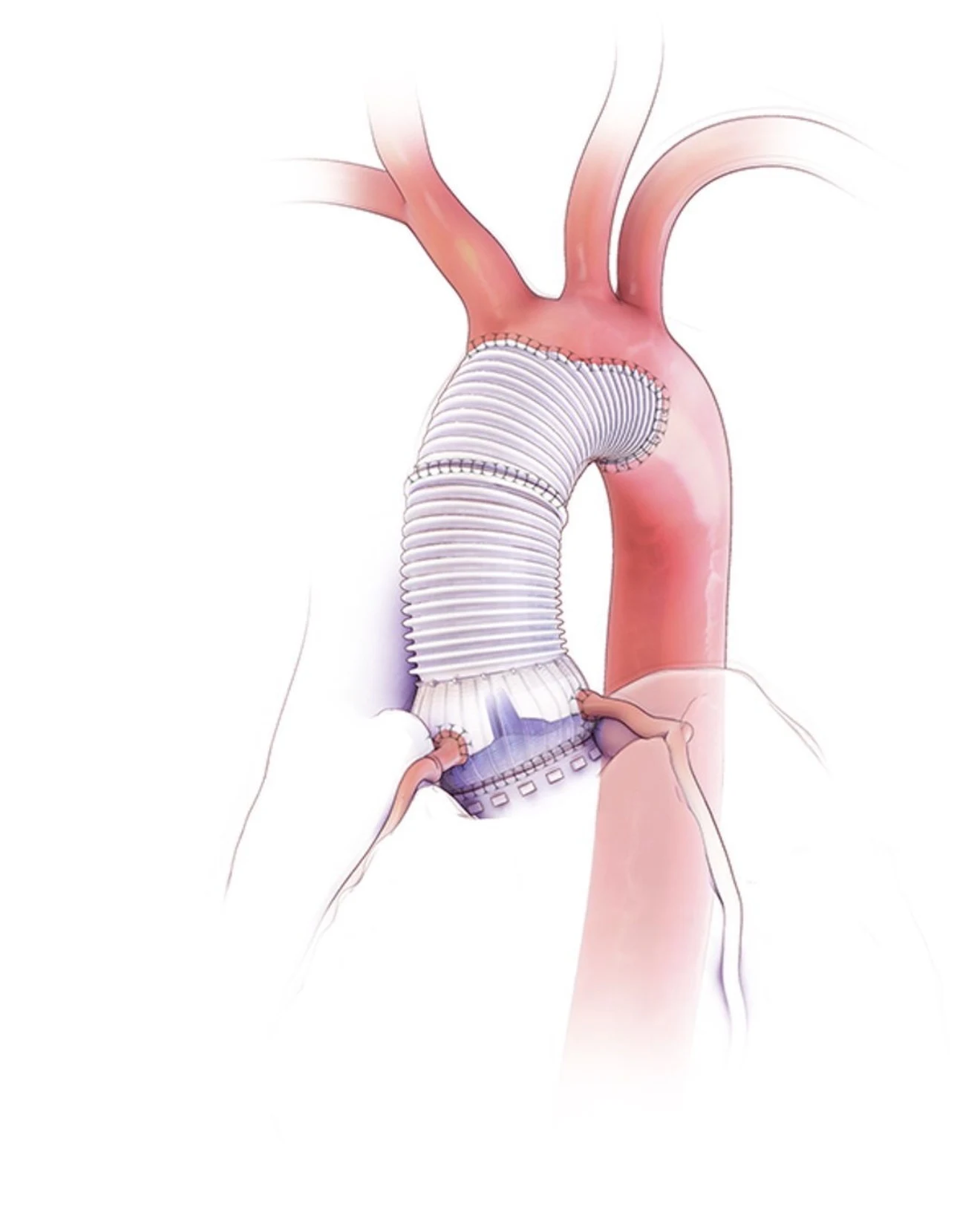
Open repair replaces the diseased aorta with a graft through a surgical incision and has decades of durability data. Endovascular repair (EVAR for the abdominal aorta, TEVAR for the descending thoracic aorta) places a stent graft through the groin arteries, with a faster recovery and lower short-term risk — but requires suitable anatomy (adequate landing zones, access vessels) and lifelong imaging surveillance. The best choice depends on your anatomy, age, and life expectancy.

Aneurysm Location & Complexity

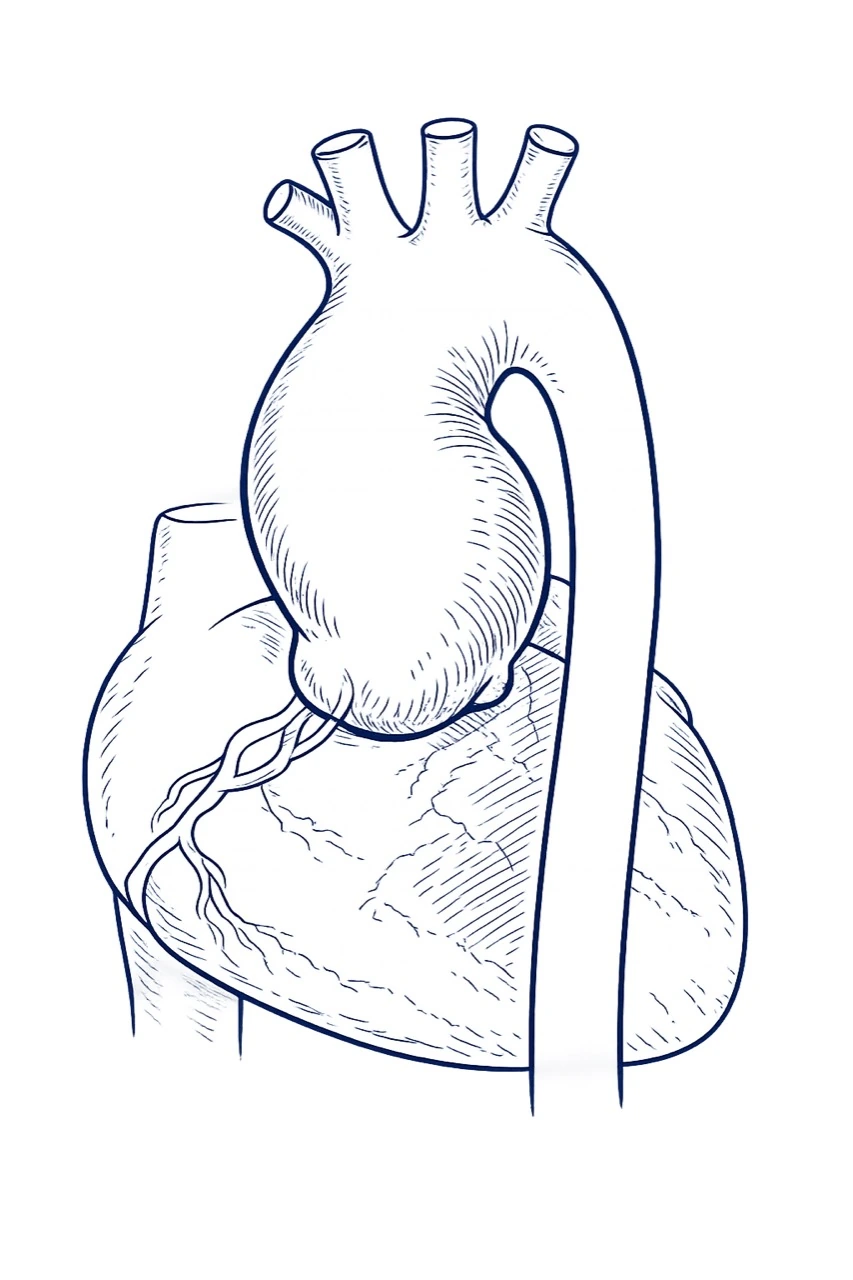
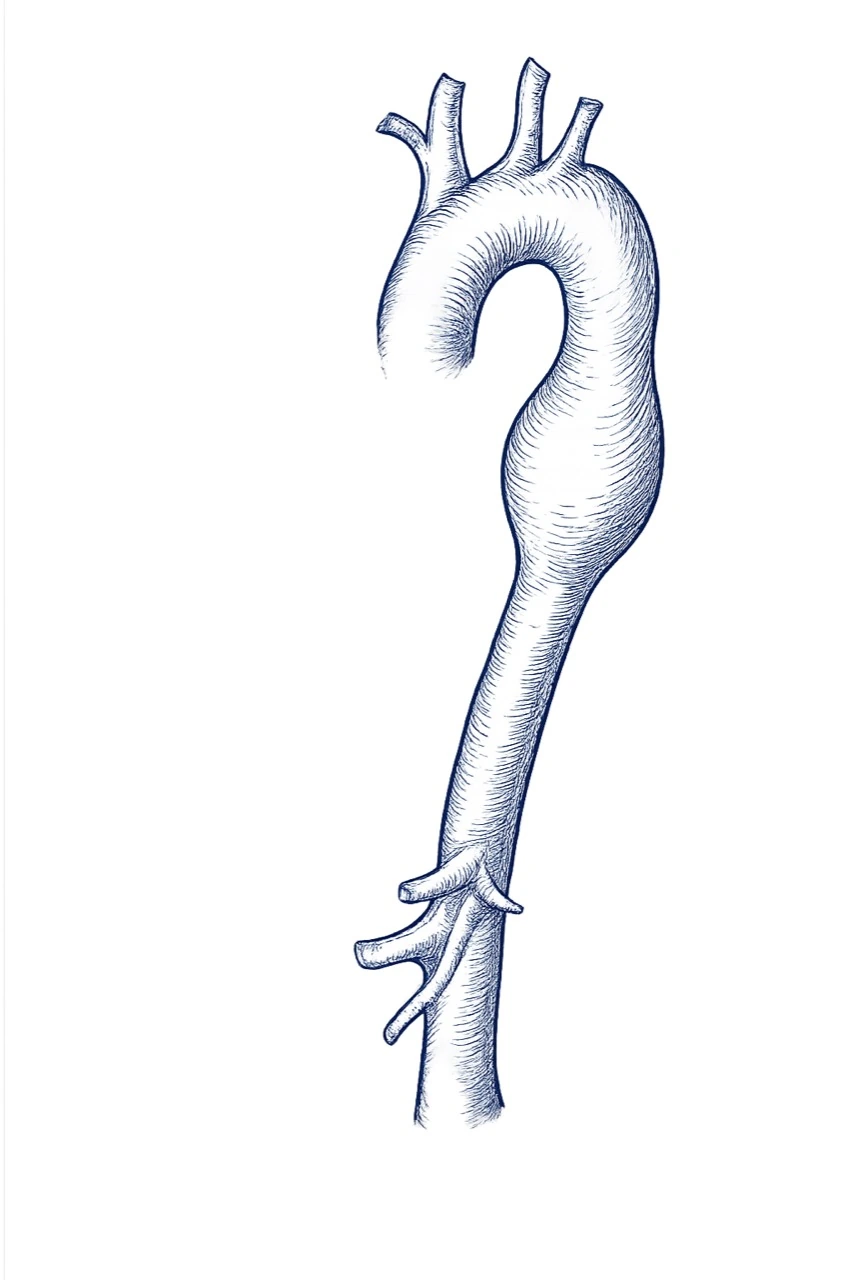
Where your aneurysm sits changes everything. Infrarenal abdominal aneurysms are often straightforward; juxtarenal, thoracoabdominal, aortic arch, and aortic root aneurysms are far more complex and demand specialized techniques (fenestrated/branched grafts, valve-sparing root replacement, hybrid procedures) available only at high-volume aortic centers. Defining your exact anatomy is the foundation of the decision.

Best-Center & Surgeon Fit

For complex aortic disease, the surgeon and center you reach are among the strongest predictors of your outcome. High-volume aortic programs achieve lower mortality and complication rates, particularly for thoracic, thoracoabdominal, and root procedures. We match your specific aneurysm to the surgeons and centers with the strongest documented aortic outcomes.

What We Analyze

Comprehensive Aortic Aneurysm Assessment

Your cardiac surgeon and cardiologist lead the review to weigh rupture risk against operative risk for your specific aneurysm.

CT / CTA & Imaging Analysis

We review your CT angiography and serial imaging to measure aneurysm diameter at standardized levels, characterize shape and location, assess growth over time, and evaluate the landing zones and access vessels that determine whether endovascular repair is feasible.

Threshold & Guideline Mapping

Your case mapped to current ACC/AHA and society guidelines for aortic disease, with the specific size and growth thresholds that apply to your aneurysm location and any underlying connective-tissue or bicuspid-valve condition — so you know exactly where you stand relative to the indication for repair.

Rupture vs. Operative Risk Weighing

A structured comparison of your estimated rupture risk if you continue surveillance against your operative risk if you proceed — calculated from your aneurysm characteristics and clinical data, including a frailty assessment, so the trade-off is explicit rather than implied.

Endovascular Feasibility Review

Systematic evaluation of EVAR/TEVAR candidacy — neck length and angulation, landing zones, iliac and femoral access, and the need for fenestrated or branched grafts in complex anatomy — to determine whether a minimally invasive stent-graft approach is appropriate for you.

Volume-Outcome Center Matching

We identify aortic specialists and reference centers with the highest volumes and best documented outcomes for your specific aneurysm location and type — infrarenal, complex abdominal, descending thoracic, arch, thoracoabdominal, or root.

Learn about our clinical methodology

Three ways to start your review

Begin wherever you feel most comfortable. Every path reaches the same Heart Team.

Frequently Asked Questions

Aortic Aneurysm Second Opinion Questions

When should I get a second opinion for an aortic aneurysm?

You should strongly consider a second opinion if you have been told you need aneurysm repair and are unsure whether you have truly reached the threshold, if you are near but not at the size cutoff and surgery has been recommended, if you have a connective-tissue condition (Marfan, Loeys-Dietz) or bicuspid aortic valve that changes the rules, if you have a complex thoracic, thoracoabdominal, arch, or root aneurysm, or if you are weighing open versus endovascular repair. The timing and type of aortic repair are consequential decisions where an independent review adds real value.

At what size does an aortic aneurysm need surgery?

In general, repair is recommended when an abdominal aortic aneurysm reaches about 5.5 cm in men (often 5.0 cm in women), and when an ascending thoracic aneurysm reaches roughly 5.5 cm — with earlier thresholds (around 5.0 cm or sometimes smaller) for patients with bicuspid aortic valve, Marfan syndrome, Loeys-Dietz, rapid growth, or a strong family history of dissection. These are guidelines, not absolutes: your body size, aneurysm shape and growth rate, and underlying cause all matter. Our review confirms which threshold actually applies to you.

What is the difference between open and endovascular aneurysm repair?

Open repair replaces the diseased segment of aorta with a synthetic graft through a surgical incision — it has decades of durability data and does not require lifelong stent surveillance. Endovascular repair (EVAR for the abdominal aorta, TEVAR for the descending thoracic aorta) places a stent graft through the groin arteries, offering a smaller incision, less blood loss, and faster recovery, but it depends on suitable anatomy and requires ongoing imaging surveillance for the life of the graft. The right choice depends on your anatomy, age, and life expectancy.

Can I just watch my aneurysm instead of having surgery?

Often, yes — for aneurysms below the repair threshold, structured surveillance with periodic imaging plus tight blood-pressure and risk-factor control is frequently the safest approach, because operating too early carries surgical risk without a survival benefit. The key is appropriate monitoring intervals and knowing the precise point at which the balance tips toward repair. A second opinion confirms whether watchful waiting or intervention is right for you at this stage.

Will getting a second opinion delay my aneurysm surgery?

For elective aneurysm repair, almost never — your White Glove Insights™ Report is delivered within 24 hours of receiving your complete medical records, which typically fits well inside the planning window for a scheduled operation. A symptomatic, rapidly enlarging, or ruptured aneurysm is a surgical emergency that requires immediate treatment, and we would never advise delaying genuinely time-critical care. If your situation is urgent, contact our team to discuss an expedited turnaround.

Medically reviewed by Rahul R. Handa, MD — Cardiovascular & Thoracic Surgeon

Last reviewed: June 2026

Related Resources

Aortic Valve Second OpinionOpen-Heart Surgery Second OpinionCABG Second OpinionCardiac Second OpinionHow It WorksPricingLearn

Facing an aortic aneurysm decision?

Get an independent Heart Team review — led by a cardiac surgeon and cardiologist — to learn whether you truly need surgery yet, and whether open or endovascular repair is right for you. A written review is delivered within 24 hours of your records, from $500.

Check My CaseRequest a Heart Team Callback Start My Written Review — From $500