WHITEGLOVEMD
Skip to content

Your Incision Should Be Your Decision™

Aortic aneurysm second opinion

Before aneurysm repair, understand the whole aortic decision.

A cardiac surgeon and cardiologist independently review your complete record—then organize the aneurysm segment, measurements, growth, body-size context, valve and root involvement, family or genetic context, operative risk, and the options worth discussing.

2
independent physician reviews
1
co-signed written report
24 hr
after complete records and imaging

No referral or travel required. With your authorization, the records team can help obtain what is needed.

Patient and family member reviewing medical information together
Built around the personA measurement matters most when the whole person is in view.
Case-specific reviewAortic aneurysm
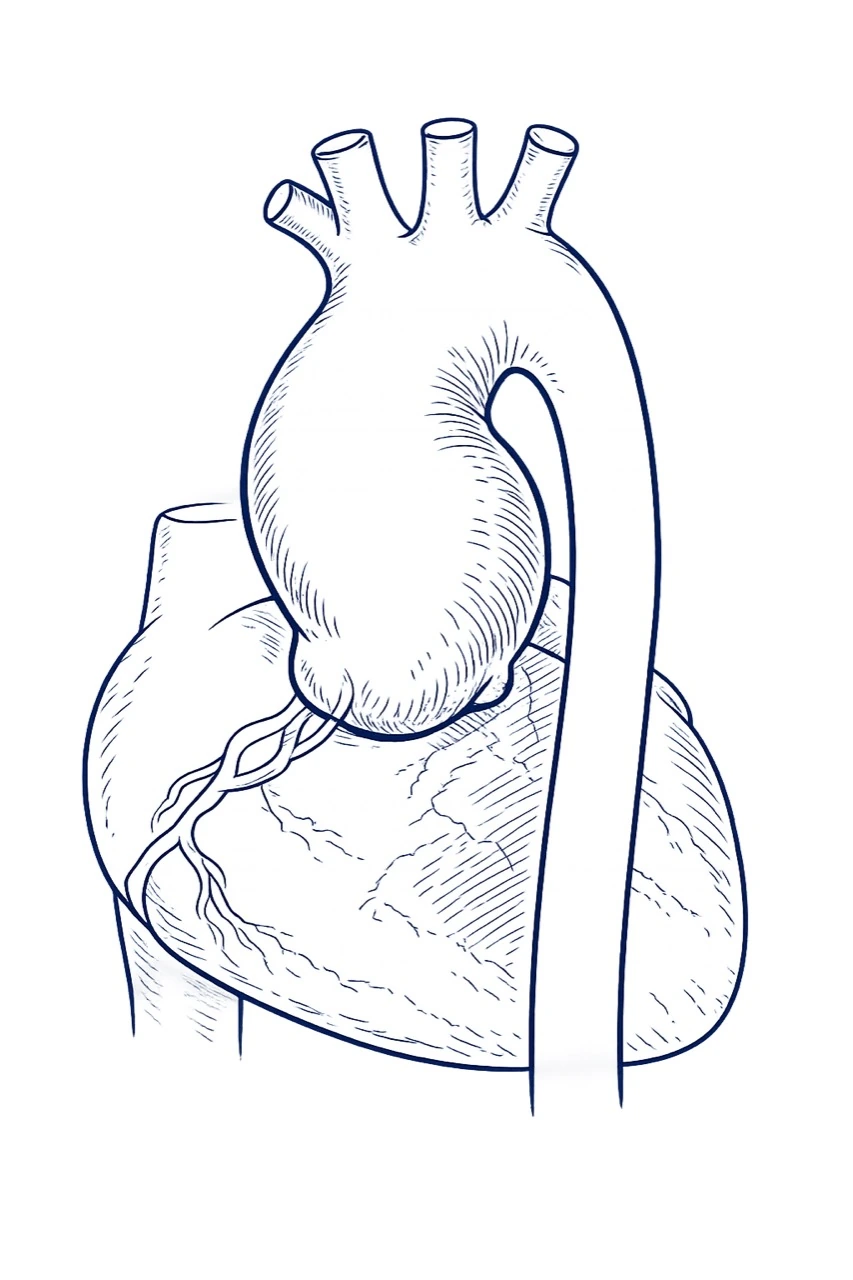
Clinical illustration of an ascending aortic aneurysm
Segment, size, growth, valve, family context, and repair strategy—reviewed together.
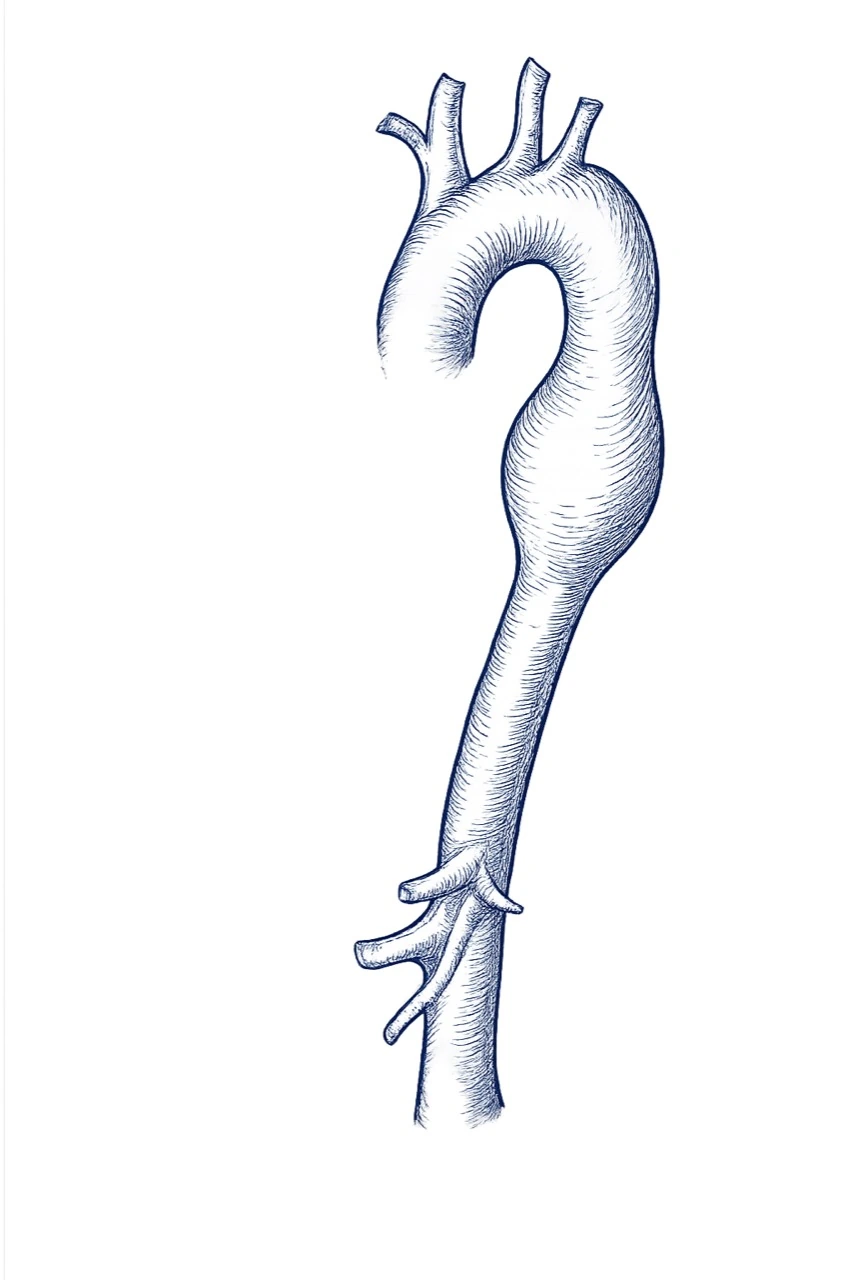
Clinical illustration of a descending aortic aneurysm
Different anatomy can mean a different decision pathway.

An aneurysm is not one number. The segment, measurement method, growth, body size, valve, family history, and proposed operation all matter.

Message Us about my decision

One clear way to begin

You do not need every record—or the right medical words—to begin.

Tell us the aneurysm segment and measurement you were given, whether repair or surveillance was recommended, and what still feels unresolved.

Message UsNo referral · no travel · no obligation to purchase
  1. 01

    Tell us what you were told

    A sentence is enough. Include what was recommended, what is scheduled, and what still feels unresolved.

  2. 02

    We identify what the case needs

    A member of the team helps determine which records and images matter and can help with retrieval after authorization.

  3. 03

    Choose the support that fits

    The written review always includes a cardiac surgeon, a cardiologist, and one co-signed report. Live physician time is optional.

The decision, in context

The measurement starts the conversation. It does not finish the decision.

Aortic aneurysm guidance is intentionally specific to anatomy and clinical context. A useful review shows which facts are documented, which comparisons are reliable, and which questions still belong with the treating team.

01

Exact segment and measurement

Root, ascending, arch, descending, and abdominal aneurysms are not interchangeable. The report organizes where the enlargement begins and ends, how it was measured, and whether the available studies use comparable techniques.

02

Change across time

A single scan is a snapshot. Prior CT, MRI, echo, or ultrasound studies can show whether the aorta is stable, changing gradually, or growing in a way that deserves a different timing conversation.

03

Size in body context

Absolute diameter matters, but height, body surface area, and indexed measurements can add important context—particularly for patients who are substantially smaller or taller than average.

04

Valve and root involvement

A bicuspid valve, valve leakage or narrowing, root enlargement, coronary anatomy, or a planned valve operation can change which questions belong in the same decision.

05

Genetic and family context

Age at diagnosis, syndromic features, a family history of aneurysm, dissection, or unexplained sudden death, and prior genetic evaluation may affect thresholds, surveillance, and questions for relatives.

06

Operative risk and team fit

The value of repair depends on the risk of waiting and the risk of the proposed procedure. Procedure-specific experience, a multidisciplinary aortic program, and the complete health picture belong in that comparison.

Repair versus surveillance

Two reasonable paths. One decision that changes over time.

The purpose of a second opinion is not to force an operation or dismiss one. It is to make the reasoning, trade-offs, and uncertainty in the complete record visible.

When monitoring remains reasonable

Surveillance

Surveillance is an active plan—not “doing nothing.” A useful review makes the imaging interval, measurement method, growth history, blood-pressure context, family considerations, and reasons to revisit timing visible.

  • Are the measurements truly comparable?
  • What finding would change the timing discussion?
  • Are valve, genetic, or family questions unresolved?
When intervention deserves discussion

Repair

The reasonable approach depends on the involved segment and anatomy. Open, endovascular, hybrid, valve-sparing, and combined valve-and-aorta strategies solve different problems and carry different trade-offs.

  • Which segment actually requires treatment?
  • Can the valve be preserved or must it be treated too?
  • Does the proposed center routinely perform this operation?

This service provides educational decision support. It does not diagnose, prescribe, select a procedure, or replace the treating physicians.

The number is only the beginning

Put segment, growth, and risk in the same frame.

Message us with the measurement and recommendation you received. We will help determine whether an independent aortic review fits.
Message Us

More than diameter

Six questions that can change what the number means.

Published guidance makes room for individualized anatomy, body size, growth, valve disease, family or genetic risk, and experienced multidisciplinary care.

01

Measurement consistency

CT, MRI, echo, and ultrasound do not always measure the same segment in the same way. The source images, landmarks, cardiac phase, and prior comparison can matter.

02

Growth-rate confidence

Apparent change may reflect true growth, a different imaging plane, a different modality, or ordinary measurement variability. The degree of confidence should be visible.

03

Valve and coronary plan

Aortic valve disease, coronary disease, and coronary reimplantation can affect the scope of a root or ascending-aorta operation and the case’s technical complexity.

04

Heritable aortic disease

Marfan syndrome, Loeys–Dietz syndrome, vascular Ehlers–Danlos syndrome, bicuspid aortic valve, Turner syndrome, and nonsyndromic familial disease require condition-specific context.

05

Pregnancy and future plans

When relevant, pregnancy intentions and reproductive counseling can change the timing conversation and the specialists who should be involved.

06

The center’s aortic capability

Aortic root, arch, thoracoabdominal, redo, and connective-tissue cases may require different expertise, infrastructure, and perioperative teams.

WHITEGLOVE Heart Team

The operating-room view and the cardiology view—on the same complete record.

Every service level includes both independent reviews and both physician signatures. The physicians confer before the report is finalized.

01 · Cardiac surgery

What operation is actually being proposed?

The involved segment, open or endovascular possibilities, valve and coronary work, cerebral and organ protection, redo complexity, and the center’s aortic capability.

WHITEGLOVEMD aortic valve markWHITEGLOVE Insights™Independent reads.
One conference.
One co-signed report.
02 · Cardiology

What does the whole clinical picture add?

Valve function, longitudinal imaging, blood-pressure and medical context, coronary disease, symptoms documented in the record, and reasonable alternatives.

Meet the entire WHITEGLOVE Heart Team

WHITEGLOVE Insights™

Your aortic decision, organized around your case.

The report is written for patients and families, but grounded in the source record, current guidance, and two physician reviews.

Download a sample report
WHITEGLOVE Insights™Aortic aneurysm review

Your anatomy.
Your timing.
Your next questions.

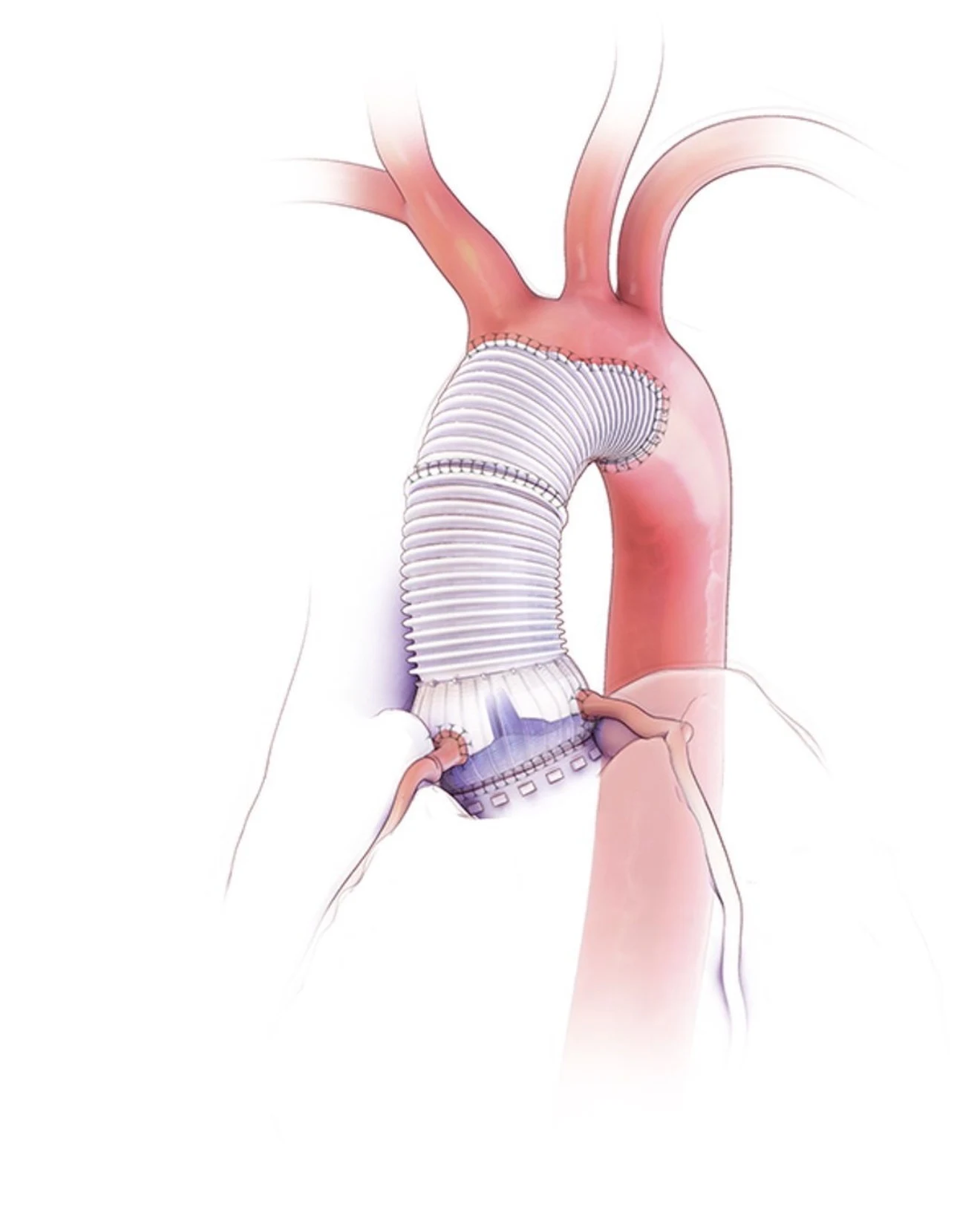
Aortic graft anatomy illustration
Case-specific aortic contextSegment, size, growth, valve, risk, and repair strategy.
Cardiac surgeonCardiologist
01

Your current aortic picture

The aneurysm segment, available measurements, serial change, symptoms documented in the record, and the treating team’s proposed plan—clearly source-linked.

02

Guideline context

The guideline categories relevant to the documented anatomy, growth pattern, body-size context, valve findings, and genetic or family history.

03

Repair versus surveillance

The reasons each path may be under discussion, where uncertainty remains, and what could change the balance.

04

Open, endovascular, or hybrid

A patient-facing comparison of the approaches that may be technically relevant to the involved aortic segment—without pretending every approach fits every anatomy.

05

Valve and root strategy

When relevant, the report connects valve function, root anatomy, and options such as valve-sparing or combined treatment to the larger decision.

06

Individualized operative risk

Procedure-specific models are interpreted alongside kidney, lung, neurologic, frailty, prior-surgery, and other clinical factors, with limitations made visible.

07

What may still be missing

Unresolved measurements, absent source imaging, incomplete prior comparisons, family or genetic context, and other workup gaps become useful questions.

08

Surgeon and center fit

Relevant aortic experience, public outcomes when available, procedure volume, geography, and practical considerations are placed in front of you.

09

Your questions, answered

The questions raised during a consultation are preserved in plain language with the Heart Team’s explanation.

10

Practical next steps

A concise list of records, questions, consultations, or transfer conversations to discuss with the physicians responsible for your care.

What may still be missing

A decision is only as complete as the record behind it.

A missing study does not automatically mean care was inadequate. It means the limits of the available review should be visible—and turned into useful questions for the treating team.

01

Source imaging

The actual CT, MRI, echo, or ultrasound images—not only a copied measurement in a clinic note.

02

Serial comparison

Prior studies and dates needed to understand whether the aorta is stable, changing, or difficult to compare.

03

Aortic-valve assessment

Valve anatomy and function, especially when the root or ascending aorta is involved or a combined operation has been proposed.

04

Coronary and branch anatomy

Coronary disease, coronary origin, arch branches, visceral vessels, and access anatomy when they affect the proposed approach.

05

Clinical risk inputs

Kidney and lung function, prior operations, neurologic and functional history, medications, laboratory data, and other inputs required for defensible risk context.

06

Family and genetic context

Age at diagnosis, a three-generation family history when available, prior genetic testing, syndromic features, and whether family screening has been discussed.

Evidence, with its limits visible

Guidelines and risk models inform the review. Physicians interpret them.

Guideline categories and modeled estimates describe populations and available inputs. They do not predict an individual outcome or replace clinical judgment.

How it works

From scattered records to a clearer aortic conversation.

The complete-record milestone matters: the 24-hour written-review clock starts only after the records and imaging required for your case have been received and confirmed.

  1. 01

    Start with a complimentary orientation

    Tell a Heart Team specialist what you were told and which part of the decision feels unresolved. No referral or records are needed for the first conversation.

  2. 02

    We help gather the complete record

    Upload what you have or authorize the records team to help obtain source imaging, reports, serial studies, clinical notes, laboratories, and the proposed plan.

  3. 03

    Two physicians review independently

    A cardiac surgeon and cardiologist examine the same complete record from different clinical perspectives, then confer.

  4. 04

    Receive one co-signed report

    Your WHITEGLOVE Insights™ report is delivered within 24 hours after the records and imaging required for the review are complete.

See the complete review process

Aortic aneurysm second opinion FAQ

Questions patients and families ask before deciding whether—and where—to repair an aneurysm.

When is an aortic aneurysm second opinion useful?

A second opinion can be useful when repair has been proposed, when the measurement is near a decision threshold, when serial studies appear to disagree, when the aneurysm involves the root, arch, or multiple segments, or when valve disease, body size, rapid change, family history, or a genetic condition may alter the context. It should not delay urgent or time-sensitive care directed by your treating team.

What aneurysm measurements will the review consider?

The review organizes the documented maximal diameter, the exact aortic segment, measurement technique, prior studies, apparent growth, and—when relevant—measurements indexed to height or body surface area. The source imaging is important because values copied across reports may not be directly comparable.

Does body size affect the timing of aortic aneurysm repair?

It can affect how the measurement is interpreted, particularly for people who are substantially smaller or taller than average. Current aortic-disease guidance describes several ways clinicians may index aortic size to height or body surface area. The report places those calculations in context without making a treatment decision for you.

How do an aortic valve problem and aortic-root aneurysm fit together?

The valve and the root are anatomically connected. A bicuspid valve, aortic regurgitation or stenosis, root enlargement, coronary anatomy, and whether valve surgery is already planned can change the scope and timing of the discussion. The complete record helps determine which questions belong together.

Will the review consider family history or genetic aortic disease?

Yes, when relevant and documented. Age at diagnosis, syndromic features, a family history of aneurysm, dissection, or unexplained sudden death, prior genetic testing, bicuspid aortic valve, and conditions such as Marfan or Loeys–Dietz syndrome can change the context for surveillance, repair timing, and family screening discussions.

Can an aortic aneurysm be monitored instead of repaired?

Many aneurysms are followed with structured surveillance until the balance of size, growth, anatomy, symptoms, and individual risk supports a different discussion. Whether surveillance remains reasonable is patient-specific and should be decided with the treating physicians. The second opinion organizes the evidence and unanswered questions in the available record.

Will the report compare open, endovascular, and hybrid repair?

When those approaches are relevant to the involved aortic segment, the report can explain their different goals, anatomical requirements, recovery considerations, durability questions, and follow-up burdens. Not every approach is possible for every segment or anatomy, and the service does not prescribe a procedure.

What records are needed for an aortic aneurysm second opinion?

The exact record depends on the case. It commonly includes the source CT or MRI images and reports, prior imaging for comparison, echocardiography when the root or valve is involved, clinical notes, laboratory results, medication history, operative-risk inputs, and the proposed treatment plan. With authorization, the records team can help identify and request what is needed.

Who reviews my aortic aneurysm case?

A cardiac surgeon and cardiologist independently review the same complete record, then confer and co-sign one WHITEGLOVE Insights™ report. Both perspectives are included at every service level.

How quickly is the written report delivered?

The written report is delivered within 24 hours after the records and imaging required for your review have been received and confirmed complete. Time spent requesting, transferring, or collecting records is outside that 24-hour window.

How much does an aortic aneurysm second opinion cost, and is insurance billed?

After your complimentary conversation, we email the package we recommend, what it includes, and the secure next step. Every option includes two independent physician reviews and a co-signed written report. The service is direct pay and WHITEGLOVEMD does not submit an insurance claim.

Can WHITEGLOVEMD help me reach another aortic surgeon or center?

When a different surgeon or center may be worth considering, the report can organize relevant experience, public outcomes when available, geography, and practical fit. The team may also help facilitate an introduction through its national physician and transfer network. This does not imply a formal hospital partnership or guarantee acceptance, timing, or treatment.

Does WHITEGLOVEMD provide emergency aneurysm care?

No. WHITEGLOVEMD provides educational decision support and independent medical-record review. It does not diagnose, prescribe, perform procedures, or provide emergency care. Sudden severe chest, back, or abdominal pain, fainting, stroke symptoms, or other possible emergency symptoms require immediate emergency evaluation; call 911.


Not emergency care.

Do not delay urgent or time-sensitive treatment while waiting for WHITEGLOVEMD. Sudden severe chest, back, or abdominal pain, fainting, stroke symptoms, or other possible emergency symptoms require immediate emergency evaluation; call 911.
The decision stays yours

Before repairing an aneurysm, bring the measurement and the whole case to the same table.

Tell us what you were told, what is scheduled, and what still feels unclear. You do not need every record to begin.